Canadian climate movement tells Carney what we’re for & what we’re against; and news on another emergency – the poison drug crisis
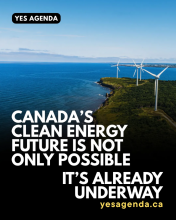
Prime Minister Carney has said, “Don’t tell me what you are against; tell me what you are for.” Well, with respect to the first part – tough! Telling the truth about the climate emergency requires saying “No” to new fossil fuel infrastructure. But with respect to the second request – done!
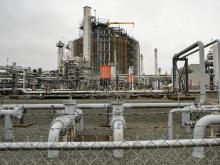
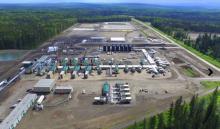
As Fortis expands its facility along the Fraser, local air pollution is expected to worsen.
Emissions from the site of a recently approved LNG expansion in Metro Vancouver are projected to exceed Canadian ambient air quality standards for nitrogen dioxide, a harmful pollutant, according to company reports.
Website editor: Here is a comprehensive, thorough short interview with Stephen Quinn of the Early Edition.
Oct. 5, 2026
We speak with Thomas Green, senior manager of climate solutions with the David Suzuki Foundation about the recent provincial and federal energy announcements.
Tax credits let companies pay little for resources. What do the parties say?
In 2019, Shell Canada, a subsidiary of one of the world’s biggest oil and gas companies, paid the British Columbia government not one dollar in royalty payments despite producing 175 billion cubic feet of natural gas.
After pressing the province for five years, we’re still coming up short.
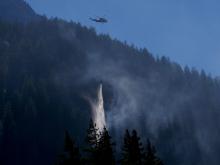
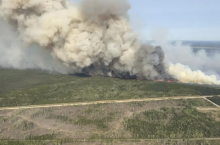
As we bid goodbye to summer and welcome fall, many of us breathe a sigh of relief that another “wildfire season” is winding down. Our skies are clear of smoke again. The days may be shortening, but our hearts feel lighter.
Expansion of LNG Canada project would double exports from Kitimat, B.C., to overseas markets
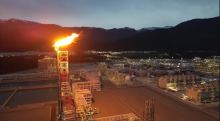
LNG Canada says its multibillion-dollar Phase 2 expansion in Kitimat, B.C., is going forward, in a move that could double exports of liquefied natural gas from the northern coastal facility to overseas markets.
In a statement Tuesday, LNG Canada CEO Chris Cooper said the project will create thousands of jobs and further strengthen Canada's role as a trusted energy partner.
Expansion of LNG Canada project would double exports from Kitimat, B.C., to overseas markets
LNG Canada says its multibillion-dollar Phase 2 expansion in Kitimat, B.C., is going forward, in a move that could double exports of liquefied natural gas from the northern coastal facility to overseas markets.
In a statement Tuesday, LNG Canada CEO Chris Cooper said the project will create thousands of jobs and further strengthen Canada's role as a trusted energy partner.
Last week’s Canada’s Changing Climate Report is a call for faster action to reduce greenhouse gas emissions and shift the economy to clean electricity, analysts say, after the government reported that average warming will reach 3.5° to 5°C by 2100 across Canada and more than 10°C in the Arctic.
Four human errors led to $1.5B gas revenue overestimation, B.C. officials say
(Four spreadsheet and conversion errors in B.C.’s latest budget led to a $1.5-B overestimation of gas revenues, officials say)
The B.C. government made four human-caused administrative errors leading to a roughly $1.5-billion overestimation of natural gas revenues in its latest budget.
That’s according to senior officials in the ministries of finance and energy who on Tuesday provided reporters with a summary of the errors identified during a closed briefing.
It has been heartening to witness the degree of national unity as Canadians steel themselves for the current trade war and insist that our governments stand up to Trump. According to many reports, Canada was dangerously close to signing a terrible deal with yet more concessions. But thankfully, at the 11th hour, the US demanded too much and Prime Minister Carney pulled the plug. The federal government has now announced counter-tariffs that will kick in after Labour Day, along with initial supports for affected workers and businesses.