Independent reviewers Merran Smith and Dan Woynillowicz said it's time to set more realistic climate targets for 2030 and beyond
B.C. needs to “recalibrate” its approach to climate action and have a serious conversation about how expanding liquefied natural gas fits into the province’s goals of reducing emissions, according to an independent review of the government’s CleanBC plan.
The newly released independent CleanBC Review shows how implementing the existing CleanBC plan would improve affordability, health, and safety.
“Protecting children and future generations from climate disasters can make life better and more affordable now,” said Eric Doherty, BC Climate Emergency Campaign transportation working group lead. “The Review points out that improving public transit, walking, rolling and cycling makes life more affordable, while also reducing carbon pollution.”
The province’s plan to reduce emissions can be salvaged. But expansion of gas exports needs scrutiny, reviewers say.
B.C.’s road map to lower carbon emissions and reduce global warming is working, but it needs adjusting to account for economic shifts, the affordability crisis and regional differences, says a team tasked with reviewing B.C.’s CleanBC climate plan.
A forthcoming deal between the federal government and Alberta for a new oil pipeline, reportedly set to be announced Thursday, promises to ignite a political firestorm.
Premier David Eby is calling “Look West,” the British Columbia government’s new economic strategy, a plan to attract $20 billion in investment from the federal government and private sector.
Glen Clark sat down for a wide-ranging interview with The Tyee.
Even as it focuses on greenlighting new wind power projects, British Columbia could eventually return to building massive hydro dams if electricity use spikes in the coming decades, according to BC Hydro chair and former B.C. premier Glen Clark.
The Crown corporation’s new long-term plan for BC’s energy future is a missed opportunity to commit to electrification, experts say.
Premier David Eby recently described British Columbia as Canada’s future “economic engine,” one that, in a nod to climate change, would be powered “by clean, reliable, affordable power.” Lots of it.
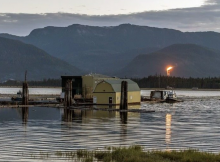
Prime Minister Mark Carney signalled his support for LNG exports in Terrace, B.C., this week, as nearby Kitimat residents learn to live beside a towering flame
Under heavy rain, an electronic sign by the side of the road in a small northwestern B.C. town warns passersby, “Flare height will vary.” It flashes to the next message: “Between 15 meters [sic] and 90.”