Tar Sands

22/06/16
Author: 
Peter O'Neil

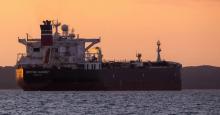
OTTAWA — Prime Minister Justin Trudeau won’t say when his government will fulfill a campaign promise to “formalize” an oil tanker ban for the northern B.C. coast.

“We’re working every day on getting both the environment and the economy protected right across the country,” Trudeau said in a recent interview when asked when he will fulfill that high-profile pledge.

“We’ll continue to work on that file.”

17/06/16
Author: 
Mychaylo Prystupa
Unifor local president Ken Smith near the Syncrude oil sands operations north of Fort McMurray in March. Photo by Mychaylo Prystupa.

Ken Smith is one frustrated oil sands labour leader. The giant wildfire that forced Fort McMurray's evacuation came as the Unifor Local 707A president was in the middle of contract negotiations, fighting to save bitumen mining jobs despite the tough times for oil companies.

But he found himself fleeing the flames along with thousands of others. Negotiations to protect the 3,450 Suncor workers he represents were put on hold.

14/06/16
Author: 
Bloomberg

Harbir Chhina helped develop the game-changing steam technology that allowed companies to tap the world’s third-largest reserves in Canada’s oilsands. It was a moonshot that paid off.

Now the oilsands industry, still recovering from last month’s wildfires, needs another one. Without a technological breakthrough like steam injection three decades ago, the flows that have transformed the country’s economy could slow to a trickle. In a world that has plenty of cheap crude, and increasingly demands cleaner energy, the oil sands look dirty, as well as expensive.

30/05/16
Author: 
Andrew Nikiforuk
Alberta's oilsands: The 'smell of money' more toxic than thought. Photo by Dru Oja Day, Creative Commons licensed.

On any hot day Shell and Syncrude tour guides used to call the gasoline-like vapours that wafted from Fort McMurray's huge open-pit bitumen mines "the smell of money."

But a new study in Nature has another name for the stench: air pollution and megacity volumes of it.

In fact the tarsands, already the largest source of climate disrupting greenhouse gas emissions in Canada, have a new grim moniker: "one of the largest sources of anthropogenic secondary organic aerosols in North America."

Category: 
29/05/16
Author: 
Robyn Allan

In his May 23 opinion piece, Tim McMillan, president and CEO of the Canadian Association of Petroleum Producers, claimed that “New pipelines will help connect Canada’s landlocked oil reserves, the third-largest in the world, to tidal ports and from there to global markets where demand for oil is growing.” 

29/05/16
Author: 
Carlito Pablo

May 26, 2016 - Ultimately, it’s up to Justin Trudeau. ​Faced with his first pipeline challenge, the Liberal prime minister can say either yes or no. A decision has to be made before the end of this year on Kinder Morgan’s plan to expand its Trans Mountain oil pipeline.

It’s a hot-button issue in B.C.’s Lower Mainland, where the pipeline terminates to deliver its cargo from the oil sands of Alberta.

The National Energy Board has given its conditional approval for the $6.8 billion project.

27/05/16
Author: 
Christopher Adams

May 24, 2016 - The Alberta government is speeding ahead with aggressive action to address climate change, introducing new legislation on Tuesday that would require the province's population and industry to pay for their pollution and reduce energy consumption.

Environment Minister Shannon Phillips tabled her government's climate change legislation - Bill-20, the Climate Leadership Implementation Act, exactly one year after her New Democratic Party assumed power and ended 44 years of Progressive Conservative governments ruling the province.

26/05/16
Author: 
IVAN SEMENIUK

A cloud of noxious particles brewing in the air above the Alberta oil sands is one of the most prolific sources of air pollution in North America, often exceeding the total emissions from Canada’s largest city, federal scientists have discovered.

The finding marks the first time researchers have quantified the role of oil sands operations in generating secondary organic aerosols, a poorly understood class of pollutants that have been linked to a range of adverse health effects.

19/05/16

First the good news:

After spending months ignoring the recommendations put forward by British Columbia's Climate Leadership team, Premier Christy Clark has finally found someone to take charge of this very important file.  

19/05/16
Author: 
Brent Jang


May 19, 2016 4:19PM EDT - The National Energy Board has conditionally approved the $6.8-billion Trans Mountain oil pipeline expansion project.

The regulator said Thursday that Kinder Morgan Canada Inc.’s Trans Mountain project must meet 157 conditions.

“These conditions would address issues such as safety, protection of the environment and other considerations,” the NEB said in a 533-page report. The conditions address areas such as engineering, safety, the environment, socio-economic issues and emergency management.

Pages

Subscribe to RSS - Tar Sands