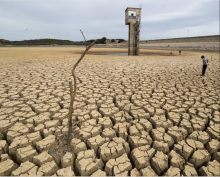
German scientists are warning that global warming is accelerating, that the planet could heat by as much as 3 C over pre-industrial levels by 2050 — just 24 years from now — and that we could exceed 5 C of warming by the century’s end.
This should be top headline news. It should alarm us all. It should spur politicians to urgent action.
WASHINGTON—The popular 1984 song “2 Minutes to Midnight” by Iron Maiden—which highlighted humanity’s march toward nuclear war—needs an update to 85 seconds. Because that’s how close the world now stands to human-made global catastrophe, according to the experts behind the Doomsday Clock. The update might not be the catchiest tune, but the alarm has to be raised somehow, as scientists say the situation facing the world is more dangerous than ever.
The judge’s ruling could reinforce the right of journalists to report from inside police ‘exclusion zones.’
A trial beginning this week in B.C. Supreme Court could help clarify the rights of Canadians to protest, the ability of the media to cover those events, and the consequences for police when they violate reporters’ constitutional rights.
Police have raided the home of one of India’s leading environmental activists over claims his campaigning for a treaty to cut the use of fossil fuels was undermining the national interest.
Investigators from India’s Enforcement Directorate (ED) claim Harjeet Singh and his wife, Jyoti Awasthi, co-founders of Satat Sampada (Nature Forever), were paid almost £500,000 to advocate for a fossil fuel non-proliferation treaty (FFNPT).
In the wake of Venezuelan President Nicolás Maduro’s stunning capture by US forces, Scotiabank CEO Scott Thompson said the “Trump doctrine” — US domination of the Western Hemisphere — will benefit the bank he runs.
The dramatic takeover of Venezuela and its oil industry is sparking more talk of pipelines and a fossil fuel bonanza in Canada. But climate experts, economists and others say don’t bet on it.
The geopolitical drama doesn’t change climate realities, energy forecasts showing oil’s decline or Indigenous legal rights that could block new projects, these observers note.