In Nova Scotia, water protectors have fiercely opposed a gas company’s plans for a decade, helped by a celebrity supporter.
Michael Harris, a Tyee contributing editor, is a highly awarded journalist and documentary maker. Author of Party of One, the bestselling exposé of the Harper government, his investigations have sparked four commissions of inquiry.
THE AMERICAN FUEL & Petrochemical Manufacturers, a powerful lobbying group that represents major chemical plants and oil refineries, including Valero Energy, Koch Industries, Chevron, ExxonMobil, and Marathon Petroleum, has flexed its muscle over environmental and energy policy for decades. Despite its reach, AFPM channels dark money and influence with little scrutiny.
The group is now leveraging its political power to criminalize protests of oil and gas infrastructure.
[The federal government purchased the Trans Mountain pipeline and expansion project from Kinder Morgan in 2018, yet Ian Anderson continues to serve as Trans Mountain president and CEO and speak for the company.
What is the function of the federal government in all this? Is it restricted to being the bearer of financial risk?]
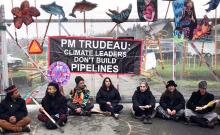
On August 16, climate activists Rita Wong and Will Offley were sentenced to jail for blocking the TransMountain site on Burnaby Mountain. Will was sentenced to 14 days in prison, and Rita to a shocking 28 days, the longest sentence yet in the more than 220 arrests of water and land protectors.
The federal cabinet’s re-approval of the Trans Mountain Pipeline and Tanker Expansion Project (“TMX” or “the Project”) on June 18, 2019 was hardly shocking news. After all, federal cabinet ministers have been saying for years that ‘the pipeline will be built.’ They even spent $4.5 billion of public money to bail out the project when pipeline company Kinder Morgan decided to abandon it.
The Trudeau government and the petrobloc (the fossil fuel industries and their political, financial and media allies) would like you to believe that the expansion of the Trans Mountain pipeline (TMX), intended to triple the flow of diluted bitumen from the Athabasca Sands to the port of Vancouver, is a done deal.
But the latest approval of TMX by the Trudeau government and the industry-friendly National Energy Board does not settle the issue.