
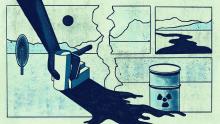



Despite pledging to reach net-zero greenhouse gas emissions, Canada’s Big 5 banks have invested over $1 trillion in coal, oil and gas companies since 2016, upping the risk to the Canadian economy as the energy transition unfolds.
Website editor: This is a very interesting and informative webinar about the 'spin' on hydrogen.
Mar. 22, 2023
Ashley Kosak discusses the false promise of hydrogen as a climate change "solution." Hint: It's not. Hosted by David Klein for System Change Not Climate Change
A Honolulu company is helping low-income families in Hawaii reduce energy costs while contributing to a more sustainable grid—by linking household water heaters to create a virtual power plant, effectively repurposing the ubiquitous appliances into grid batteries.
Hello! I’m Lisa and I follow environmental policy for The Times. There was a big win for fossil fuels this week, so the newsletter team invited me in to talk about what Big Oil is thinking and what we might expect from the industry going forward.
Canada’s greenhouse gas emissions rose 2.8% in 2021, and fossil fuels accounted for more than half of the total, according to an “early estimate” released today by the Canadian Climate Institute (CCI).
The Institute’s analysis shows emissions continuing to “decouple” from GDP, so that each unit of economic activity produces less climate pollution. But the country’s total greenhouse gas output increased by 19 million tonnes, to a total of 691 megatonnes, in a year when the economy was just beginning to restart after the COVID-19 pandemic.