As so often happens, we only get the candid admissions when people write their memoirs. In the case of America’s last major assault in the Middle East, it was Alan Greenspan, the long-time chair of the US Federal Reserve, appointed by Ronald Reagan. “I am saddened that it is politically inconvenient to acknowledge what everyone knows,” he wrote in his 2007 book. “The Iraq war is largely about oil.”
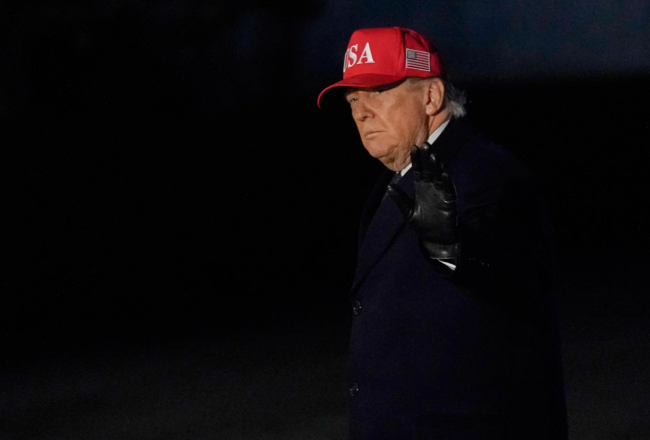
The world is caught again in the bloody tangle of war, fossil fuels and climate change. But as the world’s biggest petrostate bombs the number two in fossil gas reserves (number 3 in oil reserves), it is led by someone who has never felt constrained by inconveniences. “I still can’t believe we left Iraq without the oil,” now-US President Donald Trump fumed, years before his run for the presidency. “To the victor belong the spoils,” he said during the 2016 campaign. “I always said: take the oil.”
There are so many layers that we can only begin to tease them apart. Oil and gas have been the fuel of the ayatollahs’ murderous theocracy. The regime took power after toppling an autocrat installed after oil interests fuelled a US coup against the elected leader who had nationalized the oil industry. Oil fuels the destroyers, bombers and fighter jets today. Paradoxically, the US’s current war on Iran is choking the passage of tankers through the Strait of Hormuz, while Iran’s counterattacks are threatening oil and gas installations around the Persian Gulf.
The byproducts of burning all this oil and gas have made the war zone one of the most climate-vulnerable regions in the world. After six years of extreme drought, Iran’s president began warning last year that the country might have “no choice” but to move its capital from Tehran to the coast. Mismanagement, amplified by climate change, had shrunk the reservoirs supplying Tehran’s 10 million inhabitants to the brink of “day zero” when taps run dry completely.
There have now been several heat waves exceeding 52 degrees C in cities across Iran and the country’s all-time high for an inhabited area is a deadly 54 C, recorded at the Ahvaz airport. The “wet bulb” heat index is even more brutal — last summer, more than 10,000 workers went on strike in the gas fields after co-workers died of heatstroke. In December, the World Meteorological Organization (WMO) reported that temperatures across the Middle East and North Africa are rising at twice the global average. “Intense heatwaves are pushing society to the limits,” said WMO Secretary-General Celeste Saulo.
The world’s militaries are a major contributor to the misery. If they were a country, they would have the fourth largest carbon footprint in the world, according to 2022 estimates by the Conflict and Environment Observatory. That’s a footprint bigger than Russia, not counting the footprint of that petrostate’s invasion of Ukraine. It is larger than all the world’s air travel and shipping, combined. And it doesn’t even account for greenhouse gases from actual war-fighting or reconstruction after conflicts.
The world is caught again in the bloody tangle of war, fossil fuels and climate change. There are so many layers that we can only begin to tease them apart.
Military emissions are very hard to quantify. Under the Paris Agreement, the reporting of military emissions is voluntary. The carbon costs of combat aren’t disclosed and most countries do not provide any meaningful tallies at all.
The US is, of course, the giant among militaries, accounting for about 40 per cent of global military spending. The US Department of Defense spews more climate pollution than any other institution in the world. But military spending is surging globally. The planned expansion by NATO countries is likely to lead to an additional 1,320 million tonnes of climate pollution over the next decade. A meta-study by Scientists for Global Responsibility estimates that each additional $100 billion in military spending causes 32 million tonnes of carbon dioxide equivalent.
The human costs of war are literally incalculable. Estimates for the Iraq war range from tens of thousands to over 650,000 people killed directly or indirectly.
Three years into that disastrous war, the president who launched it made a remarkable admission. George W. Bush declared in a State of the Union address that the fundamental problem was an “addiction” to oil. He announced programs for “breaking this addiction” and set off on tour to promote an “Advanced Energy Initiative.”
In one speech at the Grand Ole Opry, he asked the crowd: "It seems like, to me, if you recognise the fact that being dependent upon oil is a problem for the long term, why don't we figure out how to drive our cars using a different type of fuel?"
It was a surprising turn from the West Texas “oil man” president. Bush’s energy initiative contained some sensible proposals like investments in solar, wind and batteries, alongside the usual scams (“clean coal”). His many critics were never convinced there was a serious intent to break the addiction. It certainly didn’t outlast the advent of horizontal drilling and the shale boom that would boost the US to be the world’s largest producer of oil and gas.
One major difference today is that “advanced” energy is now readily available, quick to install, and cheap. War, instability and price shocks mean that it “becomes more attractive to put in place solar panels, heat pumps and other technologies that could lower reliance on gas,” Thijs Van de Graaf from the Brussels Institute for Geopolitics told Bloomberg News.
It’s a broadly held view. The attack on Iran is likely to drive countries to switch “away from the volatility and vicissitudes of fossil fuel markets,” Paasha Mahdavi, an energy expert at the University of California, told Politico. Mahdavi points to the boost in European renewable energy projects and electrification of vehicles and buildings following Russia’s invasion of Ukraine.
And Max Fawcett argues that fossil fuels will be collateral damage in Trump’s war on Iran. Ukrainians and Cubans are installing solar panels as fast as they can, for obvious reasons, but the combination of conflict and alternatives is also “why Europe will continue to wean itself off volatile LNG imports as quickly as possible. And it’s why developing countries around the world — and especially in the global south — are leapfrogging greater fossil-fuel dependency in favour of home-grown solar.”
There are, of course, others who see things very differently. Alberta Premier Danielle Smith says the Iran war “underscores” the need for a new pipeline. LNG boosters say it “punctuates” the case for more fracking and exports. Even the coal industry is working its angle, calling for “critical mineral” status.
There will always be someone ready to use the latest crisis to argue for more fossil fuels. But wars by petrostates also have the opposite effect: they remind the rest of the world just how precarious, how vulnerable and how deadly the system really is.