Articles Menu
Sept. 29, 2026
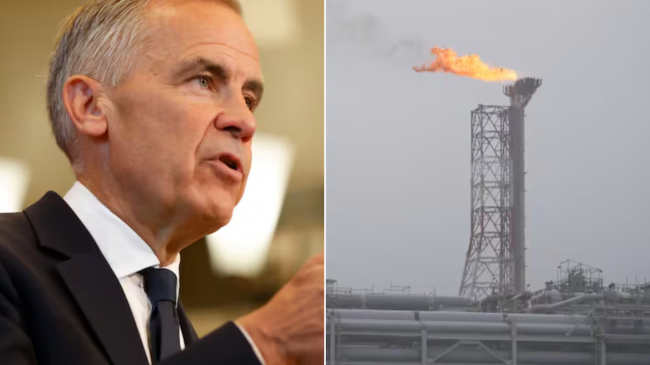
LNG Canada says its multibillion-dollar Phase 2 expansion in Kitimat, B.C., is going forward, in a move that could double exports of liquefied natural gas from the northern coastal facility to overseas markets.
In a statement Tuesday, LNG Canada CEO Chris Cooper said the project will create thousands of jobs and further strengthen Canada's role as a trusted energy partner.
"LNG Canada Phase 2 is another nation-building investment that demonstrates Canada can build big things when governments, First Nations partners, local communities, skilled trades, contractors and investors work together with shared purpose," Cooper said.
Its Kitimat plant shipped its first cargo load of LNG destined for Asian markets last year.

Why Canada’s LNG export expansion is far from a sure thing
Prime Minister Mark Carney will be highlighting the decision, which his office calls a "historic investment in Canada's energy industry" while making an appearance in Vancouver later Tuesday.
His public itinerary says the news will be shared at 11 a.m. PT, followed by a 1:20 p.m. PT briefing on "new measures to protect Canada's oceans."
The Canadian government says the expansion would make the Kitimat plant the second-largest in the world, worth billions to the national economy.
But while the LNG industry has strong political support from the federal government, as well as the campaigning B.C. NDP and Conservative Party of B.C., critics worry its rapid expansion will further contribute to Canada's rising greenhouse gas emissions at a time of climate crisis.
LNG is made from natural gas, a fossil fuel often extracted in northeast B.C. and Alberta through a practice called hydraulic fracturing or fracking.
It involves drilling down into the ground and injecting a mixture of water, sand and chemicals into the ground to force the release of the oil and gas.

Locals express safety concerns over flaring gas at Kitimat’s LNG export terminal
The gas is then shipped via pipeline to terminals, which cool it to about –160 C, at which point it can be shipped overseas for use as a fuel.
The expansion project is expected to roughly double the production of liquefied natural gas from 14 million to 28 million tonnes annually, LNG Canada said.
It also said it is working with Coastal GasLink to expand the capacity of the existing 670-kilometre pipeline through the construction of five new compressor stations across northern B.C., including territory that was blocked by Wet'suwet'en hereditary chiefs and their supporters opposed to the line's construction, which led to nation-wide protests and arrests.

RCMP arrests protesters at Wet'suwet'en blockade
LNG is often referred to as "clean" because burning it for fuel causes fewer emissions than coal or oil — but that claim is disputed by some analysts because of the energy and destruction it takes to produce.
One of the known impacts of fracking is an increase in earthquakes, which have been felt with increasing frequency in B.C.'s Peace River region in recent years.
Critics also point out ramping up LNG production would sharply increase the amount of emissions from natural gas production in British Columbia.

Canada’s clean LNG pitch — and why not everyone is buying it
Environmentalists argue that reducing emissions carries more urgency in the wake of a federal report warning Canadians to prepare for a future that's 5 C hotter — which will lead to the disappearance of glaciers in western Canada and longer, more intense summer droughts, among other impacts.
Still, the project has been identified as one of national importance under Carney, and has support from both the B.C. NDP and B.C. Conservative Party — who have each pledged to ramp up LNG production should they form government following the Oct. 24 election.
On the campaign trail Monday, B.C. Conservative Leader Lorne Doerkson announced his plan to make B.C. an "energy superpower," promising to cut red tape in order to triple LNG production by 2035.

What impact will LNG Canada’s Phase 2 project have on local First Nations communities?
In response, the B.C. NDP argued the plan wasn't ambitious enough, and said it already has plans to have B.C. outpace Doerkson's projections.
The B.C. Greens, meanwhile, have called for a moratorium on LNG expansion, citing environmental risks and concerns about Indigenous rights, further saying that fast-tracking projects is eroding oversight and accountability.
[Top photo: A flare fires off from the LNG Canada plant in Kitimat, B.C., on April 11, 2025, where a Phase 2 expansion has been approved. (Patrick Doyle/The Canadian Press, Chris Corday/CBC)]