Articles Menu
Jun. 19, 2026
The Canada Pension Plan Investment Board (CPPIB) is financing four liquefied natural gas (LNG) terminals — and signalling there could be more to come — despite the industry bringing worsening climate damage and escalating financial risks to the Canada Pension Plan (CPP).
This reckless bet on fossil fuel expansion by the $793-billion investment manager for the CPP comes despite an accelerating energy transition, expected LNG supply glut and increased market competition from cheaper, cleaner alternatives.
CPPIB’s gamble on LNG expansion also comes amidst grim scientific warnings that the global climate is approaching dangerous tipping points. The pension manager’s deficient climate approach has led young Canadians to take CPPIB to court, alleging that it’s breaching its duty to invest in their best interests by mismanaging climate risks while investing billions in fossil fuels.
While a CPPIB executive recently said climate change is “the single biggest source of risk for the fund,” that hasn't stopped CPPIB from making at least $6 billion in new investments in fossil fuels in 2025. That includes big bets on LNG — a primary driver of the climate crisis because it leaks methane across its supply chain.
CPPIB recently helped enable the advancement of Commonwealth LNG, a Louisiana export facility. In 2022, CPPIB committed US$100 million to a private equity fund that bought fracked gas assets in Texas and helped finance Commonwealth LNG. In May, CPPIB contributed another US$1.2 billion for a 31 per cent stake in Caturus, Commonwealth LNG’s proponent.
Last fall, CPPIB announced a $4.1-billion investment in Sempra Infrastructure Partners, falsely claiming that “LNG infrastructure is central to meeting rising global demand and supporting long-term transition goals.” CPPIB’s investment helped enable Sempra’s advancement of Port Arthur LNG Phase 2 in Texas. It also means our national pension manager will take stakes in Cameron LNG in Louisiana and Energia Costa Azul LNG in Mexico — LNG facilities that are both considering expansions that would lock in decades of additional fossil fuel production and associated emissions.
CPPIB is directly financing four LNG projects — and appears to be considering even more. Amidst rumours that the federal government is arm-twisting pension funds to invest in LNG Canada — the most polluting LNG facility in the world — CPPIB’s CEO falsely claimed that the world is “not (in) an energy transition” and called LNG an “attractive” investment that “will be fruitful in the near term”.
Global energy markets are rapidly shifting. LNG faces slowing demand growth, increased competition and volatile price swings. Recent geopolitical shocks have underscored how fossil fuel dependence exposes economies to price spikes, inflation and energy insecurity — reinforcing why many governments are accelerating the shift toward renewable energy.
LNG investments are particularly short-sighted for pension funds, which are mandated to invest for the long-term and are distinctly exposed to systemic climate risks. A recent cost-benefit analysis of US LNG exports found that “climate damages greatly exceed economic benefits.” That’s why the sustainability head at Quebec’s La Caisse recently warned “we must be very careful” because "when you invest in natural gas, there is a significant risk of carbon lock-in, meaning you're investing in assets that will produce a large carbon footprint for perhaps 30 to 40 years.”
CPPIB’s financing of LNG expansion is imprudent, further exposing the CPP to a volatile commodity facing terminal decline in the face of worsening climate change and the availability of cheap, abundant alternatives. CPPIB seems to be disregarding first-hand warnings from scientists about climate tipping points and the need to phase out fossil fuels.
This haphazard approach to climate risk helps explain why young Canadians are taking CPPIB to court. As one applicant warns, “A basic understanding of climate science and economics dispels CPP Investments’ claims that investing in fossil fuel expansion is compatible with sustainability, an adequate standard of living, and a functioning economy. Our pension managers are betting against our future. We deserve better, we expect better, and other financial actors should take note.”
Patrick DeRochie is senior manager at Shift: Action for Pension Wealth and Planet Health, a charitable project that tracks the fossil fuel investments and climate strategies of Canadian pension funds, and mobilizes beneficiaries to engage their pension managers on the climate crisis.
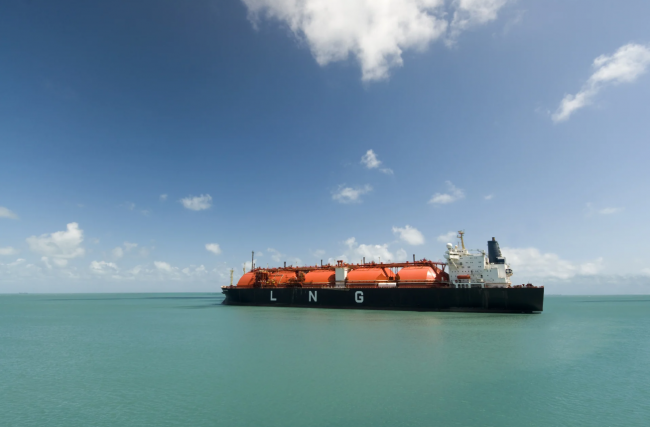
[Top photo: LNG investments are particularly short-sighted for pension funds, which are mandated to invest for the long-term and are distinctly exposed to systemic climate risks. Photo courtesy: Shutterstock]