Articles Menu
Jul. 27, 2026
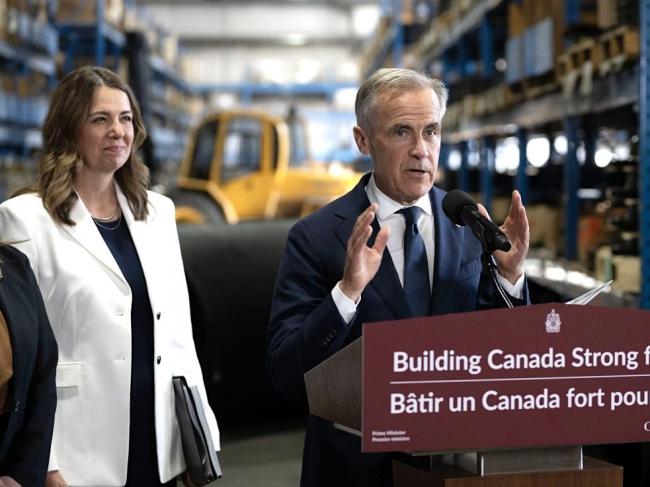
Earlier this month Prime Minister Mark Carney, Alberta Premier Danielle Smith and five largely U.S.-owned oilsands companies proclaimed a leap forward in “carbon management.” The three parties signed a memorandum of understanding assuring more bitumen production and more oil exports could somehow result in reduced carbon dioxide emissions.
For years now, the governments of Alberta and Canada have talked up the method as means to get “more low-risk, low-cost and low-carbon Canadian energy to market while fighting climate change.” Federal Energy Minister Tim Hodgson has said CCUS will help make Canada “a clean energy superpower.” Five oilsands producers hail CCUS as an “environmental innovation” or “proven technology.”
But that’s not what the scientific and economic record says. Study after study catalogues a history of high costs, serious risks, geological side effects and broken promises. Most high-profile projects have faced shutdowns, leaks or technical snafus.
CCUS is turning out to be a perfect example of what the social critic Jacques Ellul called the “technological bluff.” The bluff begins with prominent members of the state, media and industry making extravagant claims about the ability of an emerging technology to foster “progress.” Their boasts drown out authentic debate.
But once deployed, the technology creates more problems, requiring a new agenda to solve them and initiating another cycle of the technological bluff. By promising to give us what we want, the technology “ultimately dictates what we want,” warned Ellul.
Thirty years ago, for example, we were assured that computers and the internet would expand democracy and usher in a new era of freedoms. Few challenged the bluff. But perhaps too late we see that the internet can be used to undermine human freedom and mental health. “Lulled by the bluff of technological discourse,” warned Ellul, “we sleepily fail to perceive the perils that confront us.”
Now we’ve been told by Carney and Smith that CCUS is key to ridding the world of carbon emissions by 2050, building a new Canada and accelerating innovation. What could possibly go wrong?
Daunting targets, unrealistic promises
Let’s start with the issue of scale. Over the last three decades governments have spent more than $40 billion on carbon capture to build 70 projects connected by 9,000 kilometres of pipeline. Yet the technology captures and stores less than 0.1 per cent of annual global emissions. Annual CO2 pollution now hovers above 38 gigatonnes while captured carbon amounts to less than 40 megatonnes per year.
Consider the Pathways Project, which may cost $30 billion given a history of cost overruns for the technology. Annually, it would sequester a paltry six million tonnes of oilsands emissions, which are expected to grow.
Zoom out to test whether, as the bluffers promise, carbon capture can reverse rising global emissions. Evidence to date says no. Making a sizable dent in global emissions would require an infrastructure of pipes and plants to match current oil and gas infrastructure, argues energy expert Vaclav Smil. Trying to do so, he says, would be “stupid.”
That assumes it works as advertised. But most projects have consistently failed to achieve their targets. Equinor’s Sleipner project reported for years that it annually stored one million tonnes of CO2 in shale formations 1,000 metres below the ocean floor. That proved to be grossly overstated. In 2023, for example, the 30-year-old project sequestered just 106,000 tonnes.
In Australia, regulators approved the world’s largest CCUS project based on claims that it would capture 80 per cent of the CO2 removed from a gas reservoir. In 2019, after a three-year delay, the Gorgon project initially captured 44 per cent of the targeted CO2. In 2023 the capture rate declined to 30 per cent.
At the 2014 opening of the Boundary Dam carbon capture project in Saskatchewan, backers promised to sequester 90 per cent of CO2 from a coal plant. Due to mechanical and operational issues the operation’s actual overall rate has been, at best, 68 per cent.
The Petra Nova carbon capture plant in Texas started in 2017 and closed in 2020 for three years due to a raft of technical problems. Although its proponents pledged to remove 90 per cent of the emissions from the coal plant, the real number proved to be barely 50 per cent when the emissions from the gas-powered plant to run the facility were included.
Guzzlers of water and capital
CCUS projects use water to cool a power plant and process solvents. So much water that scientists have long warned that full CCUS deployment would further parch many parts of the world. One recent study concluded that building enough carbon capture to reach net-zero emissions by 2050 “would double the water footprint of humanity.”
Alberta is hardly immune to such repercussions. A recent study concluded that expanding CCUS projects in southern Alberta “may introduce water supply challenges” or “could significantly impact water availability, particularly in years of lower streamflow.”
When new technologies are expensive, boosters often argue that costs naturally will come down over time. But a 2023 University of Oxford study concluded that the cost of building CCUS projects has not declined in the last 40 years.
Researchers found the highly subsidized industry had performed no systematic study of costs, but what data exists shows persistent cost increases. The study concludes that deploying carbon capture technology to reach so-called “net zero” goals by 2050 will cost about $1 trillion per year — far more than lower-tech pathways such as reducing energy demand and shifting to renewable energy sources.
Nations that put “CCS at the centre of their national decarbonization plans risk putting themselves at a competitive disadvantage,” warned the authors.
Beware of leaks
To work, CCUS projects must stash carbon in the ground and keep it there indefinitely. But storage sites and pipelines can bleed greenhouse gas.
Take the case of Archer Daniel Midland’s operations in Illinois. In 2017, the Illinois Industrial Carbon Capture and Storage project started burying CO2 from an ethanol facility under the small city of Decatur at a rate of one million tonnes a year. Three years later the gauges on its monitoring wells started to fail. Then 4,000 tonnes of CO2 migrated up the wellbore and into “unauthorized zones,” violating water safety laws. The company did not notify the public at the time.
“The Mahomet Aquifer, which sustains nearly a million people in Central Illinois, cannot afford to be put at risk by experimental technologies like carbon capture and storage,” noted one critic. No matter. The technology resumed operations in 2025.
In 2020 a CO2 pipeline near Satartia, Mississippi, ruptured and spewed clouds of the gas for four hours. The CO2, which sucks oxygen from the air, stopped cars and knocked scores of people to the ground where they lay shaking like zombies, unable to breathe. Nearly 50 people were hospitalized.
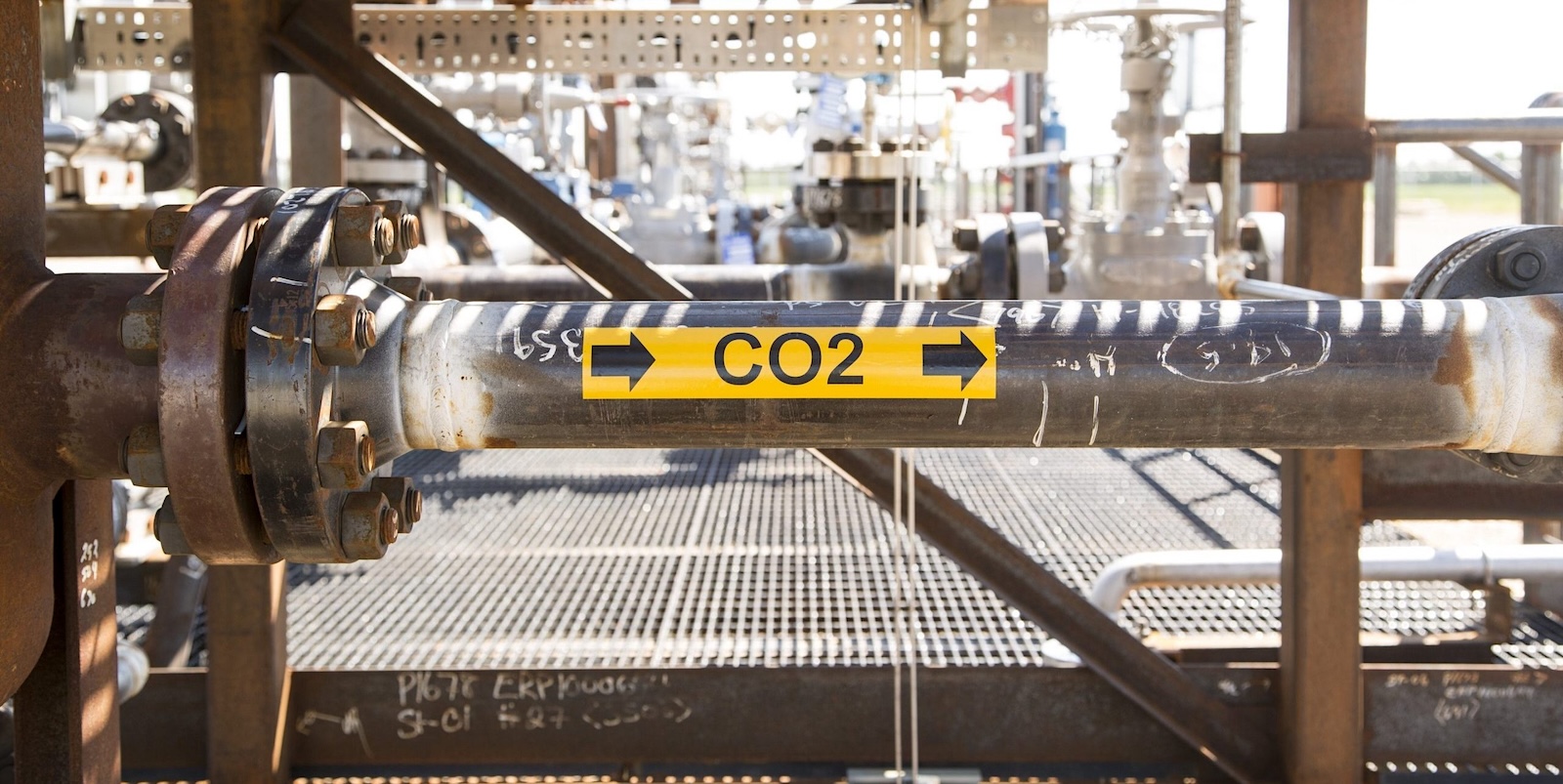
Forcing vast quantities of CO2 beneath the planet’s surface can result in unexpected leaks of a different kind. The gas can find its way via underground fractures into groundwater formations. When CO2 dissolves into water it forms a corrosive acid that can radically change pH levels and mobilize heavy metals such as arsenic, mercury and lead. This chemical process can turn a vital aquifer into a toxic lake unfit for human or agricultural consumption.
As a consequence, the state of Queensland in Australia banned carbon sequestration projects in the Great Artesian Basin, which serves as the continent’s largest groundwater aquifer.
While the promise of permanent storage underground exerts a powerful appeal, the record says that’s an unsafe bet. As one scientific paper put it: “The uncertainty regarding the long-term durability of storage locations presents a substantial obstacle to the broad use” of the technology.
More problems after decades of denial
Add to stressed water sources and leaking emissions other known problems caused by CCUS that have yet to be solved.
Injecting CO2 into old oilfields, for example, can activate methane-farting bacteria living underground. Such microbial activity in a Louisiana hydrocarbon reservoir converted up to 20 per cent of injected CO2 into methane, according to a recent study in Nature. The implications are literally explosive because methane not only is a much more potent greenhouse gas than CO2, but can combust if it leaks.
And then there is the potential for earthquakes. Pushing CO2 below ground creates powerful pressures that can trigger seismic activity. Algeria’s In Salah venture, for example, caused small tremors monitored by concerned researchers. The project was closed in 2011. Studies warn that carbon capture technology could possibly cause quakes strong enough to damage property, contaminate groundwater and threaten public well-being.
None of this should take us by surprise. In 1987 U.S. scientists studying the growing threat of climate change put us on notice by writing: “Control of emissions by the collection of gas from the stack is not a solution to the global buildup of carbon dioxide in the atmosphere.” Unfortunately, in the intervening four decades, carbon capture technology has not evolved to prove them wrong.
In fact, when attached to fossil fuel power plants, carbon capture cuts their efficiency by up to 30 per cent, which in turn ups the demand for more fossil fuels in a world that has yet to curb its energy appetite. Note that 70 per cent of existing CCUS projects use the captured CO2 to push out more oil and gas from aging hydrocarbon formations. The burning of those fossil fuels, of course, creates more emissions.
Why then, do the boosters persist? The French energy historian Jean-Baptiste Fressoz traces the durable appeal of CCUS to government and bankers. It began when Intergovernmental Panel on Climate Change scientists developed computer models that made net-zero emissions look possible with the widespread deployment of carbon capture and storage. The scientists either didn’t realize or didn’t care that governments could not afford to go all in on carbon capture. And politicians grasped at this loophole in the basic case that we must limit fossil fuel use to stave off calamity.
The consequences of this delusion have been profound. Citizens have been left with the impression that a technological pathway to halt the climate crisis is in the works when no such solution exists, writes Fressoz.
He urges: “Accepting the impossibility of net-zero targets is essential to freeing climate expertise from misplaced optimism and technological illusions — and to opening new, more grounded lines of inquiry.”
What would constitute “more grounded lines of inquiry” and why are we not invited to pursue them by Mark Carney and his newfound ally Danielle Smith? What is forfeited for future generations when our leaders refuse to seriously explore questions like these: How can society actually reduce energy demand? How can we live with less instead of more? What is sufficient for a good life? What would be the economic, social and political consequences of actively reducing economic growth?
Let’s be clear about what Smith, Carney and the oilsands companies really are saying with their latest MOU. They are embracing a dubious, dangerous technology because it helps them pretend they are tackling the climate crisis that poses an existential threat to coming generations.
Isn’t it time to call their bluff?
[Top photo: PM Carney and Alberta Premier Smith announce a new oilsands pipeline on July 2. Two weeks later they unveiled a $20-billion carbon capture project. Photo by Todd Korol, the Canadian Press.]