Articles Menu
Feb. 13, 2026
While court decisions may set the table, negotiations and handshakes will be needed to finally resolve century-old questions surrounding land title in British Columbia, says former B.C. cabinet minister and current treaty commissioner George Abbott.
Last year’s Cowichan decision, in which a B.C. judge declared some Richmond fee simple property titles invalid, has shaken some property owners. But the ruling isn’t the end. Instead, it sets the ground rules for the negotiations that will hash out its actual impacts on the ground, Abbott says.
Abbott recently published a book on treaty negotiations and land issues in B.C. called Unceded: Understanding British Columbia’s Colonial Past and Why It Matters Now.
Abbott spoke to Tyee senior editor Tyler Olsen about how B.C.’s history and lack of treaties have set the stage for recent court decisions, and how questions about who owns the province’s land may finally be resolved. This interview has been edited for length and clarity.
The Tyee: There has been a lot of talk about the Cowichan decision and its impact, but it seems like one of its big, lasting impacts will be its influence on future treaty negotiations. Can you put the Cowichan decision in the context of the treaty negotiations that will take place with First Nations all around the province?
George Abbott: The Cowichan decision, to me, really underlines the critical importance of keeping treaty discussions moving, and ensuring that there are, within reasonable time frames, successes in the treaty process. Where some nations are unwilling or not prepared to move into treaty discussions, I think it’s also important for government, where they can, to pursue foundation agreements, like the Lake Babine Nation Foundation Agreement or other reconciliation agreements. We have aspects to our history in British Columbia that have contributed to injustices across time, and negotiation of treaties and non-treaty agreements are the most productive way to try to reconcile some of those injustices.
How do these court cases and decisions play into that and what do they say about the status of land and land claims in BC?
I spent much of the last five years of my life researching and writing a book on these questions, so I’ve formed some strong conclusions about how we got where we are today. Public policy decisions made 160 years ago have really contributed to the creation of difficult injustices to resolve.
Late colonial and early provincial governments created reserves synchronously with a white settlement in the province. The consequence of that particular approach to creating reserves was that often, by the time reserves were created, much of the best farmland and other useful land had been swallowed up through pre-emptions or other forms of tenure, and First Nations, as a consequence, often got what might best be described as the guts and feathers, after much of the better land had been taken out.
The second one, I’d say, was refusal by both the late colonial and provincial governments for 120 years to participate in any kind of treaty making with First Nations in the province. Gov. James Douglas did some of that in his early days on Vancouver Island, but not since then and not until 1991 was the province prepared to move back into the treaty-making business. They had the opportunity. As British Columbia entered Confederation back in 1871, it was invited by Canada to undertake the numbered treaty process that was going on east of the Rocky Mountains. And British Columbia, in no uncertain terms, refused to go that route.
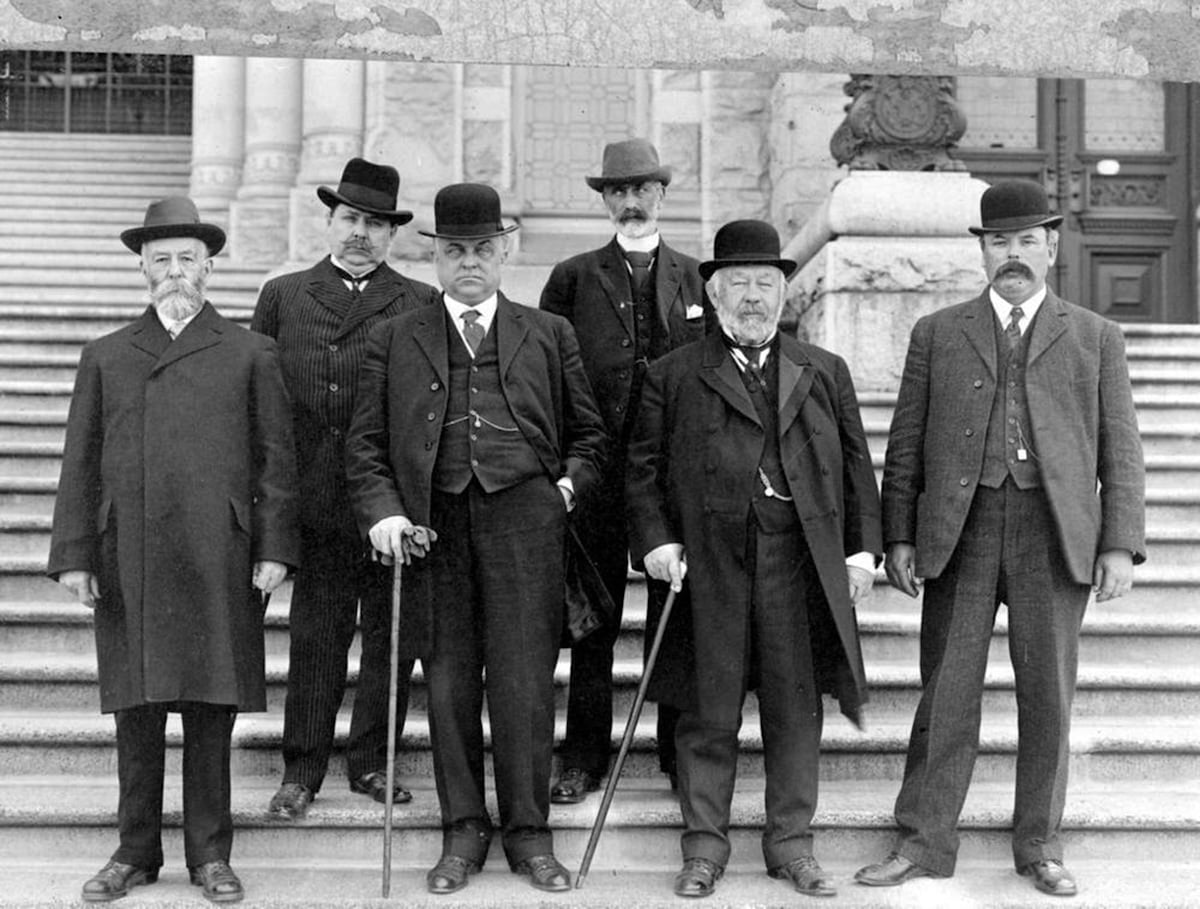
Those two issues have left us in a place where often traditional lands, and sometimes even core lands of First Nations, were lost by various processes. First Nations were dispossessed of lands. You read in my book, really, literally dozens of cases where that has occurred. Many of them were pointed out to the McKenna-McBride commission back in 1912 to 1916; as they toured the province, very frequently examples of dispossession were raised by First Nations.
So we’ve got a lot of work to do. Some nations have, out of frustration, chosen to litigate rather than negotiate. And that’s their right to do so. The Cowichan decision is one example of that. There have been other prominent examples. The Tŝilhqot’in decision, of course, is very prominent in our recent history. That is always a right that First Nations can enjoy if they wish to again.
Rather than see the courts tied up literally for decades and outcomes from those court decisions being uncertain until the Supreme Court of Canada, in some cases, rules, I think it’s far better for both the province and First Nations in the province to negotiate, to find ways to resolve those injustices that have occurred across time because of the original public policy.
Do you see these decisions emphasizing the need for that treaty-making process and also informing the government’s response and negotiating position?
It does.
Litigating is not a roll of the dice, but it is also less than certain what the outcome is going to be for any party. In every case with litigation, the parties don’t always emerge feeling much satisfaction with the outcome, and that’s why I think the negotiating route, even though it’s sometimes time-consuming, and even though sometimes it’s an object of frustration, nevertheless the benefits get articulated in a much more clear and certain way than moving from Supreme Court of British Columba to the B.C. Court of Appeal to the Supreme Court of Canada.
With negotiation, you get to build your own outcome through negotiation, and that’s why it is so important for parties to engage there.
Do these court findings kind of change the incentive structure when it comes to government behaviour and willingness to negotiate treaties? Or are we still at a place where that can still be seen as a political risk?
There are some members of the public who are going to be critical of both negotiated and legislated solutions like treaties. But they’re also critical when courts, as they did in Tŝilhqot’in, award land and sovereignty over an area. I think there’s a portion of the public who don’t understand B.C. history, and don’t understand how we got to where we are today.
One of the reasons that I wrote my book Unceded, and wrote it in the way that I did, was to hopefully inform a broader portion of the public that B.C. really was unique in the way it pursued its Indigenous relations for 120 years. And the consequence of that unique pursuit of Indigenous relations is that we find ourselves here in 2026 with a whole lot of both legal injustices and legal liabilities to sort out one way or another.
If we don’t engage actively in negotiation, we are going to find ourselves, without a doubt, in court, challenged by nations that are frustrated by inactivity and what they see as unfairness in the way we’re approaching the processes.
Do you think politicians will now be more willing to come to the table and negotiate?
I had the good fortune a few weeks ago to visit the legislature for a couple of days as a treaty commissioner. I met with MLAs on both sides of the house, as well as with the minister of Indigenous relations. I was very much encouraged by what I heard. I think there is very strong support across most of the legislature for negotiating treaties and non-treaty agreements. I think most members appreciate that there are injustices historically that need to be remediated through negotiated treaties and non-treaty agreements.
I did not meet with the OneBC party when I was there, and I know they have a very different view of treaty, and from what I’ve heard of MLA Dallas Brodie, she broadly condemns what she calls the reconciliation industry, i.e., treaty and non-treaty making in the province. I fundamentally disagree with her. I hope she reads my book as well, because if her views are genuine, she does not have a proper understanding of why we got into the position we are in today in this province. But I don’t think her views are broadly reflective of the views of the legislative assembly.
Has your research and your time spent over the last decade outside of government changed your perspective on how BC became a province, and its history and its relations with Indigenous people?
Absolutely. I started research probably close to a decade ago on Unceded. I dug in pretty deeply in archival sources. It was a huge learning journey for me. I grew up in Sicamous about a kilometre from Eagle Pass Landing, which was a steamer stop on the way to Columbia River goldfields in the 1860s.
Eagle Pass Landing was one of the first sites of Indigenous dispossession in the colony of mainland British Columbia. The Splatsin people had been resident on that ground for likely thousands of years, and they were dispossessed by the creation of Eagle Pass Landing. I had no idea as I grew up in Sicamous that that had occurred so close to where I grew up.
We used to find arrowheads and artifacts on our farm, but I had no appreciation. I knew obviously that area had been a place where First Nations had lived, historically, but I had no idea of the dispossession that First Nations had experienced. Pretty much in every corner of the province, one can find those sorts of dispossessions.
Reading the transcripts of the McKenna-McBride commission was a huge eye-opener for me as well. I had no idea of the extent of dispossessions that had occurred historically in the colonies and in the province. Lots of people have said to me, “Reading Unceded was just a tremendous learning journey for me, a huge eye-opener for me in terms of history I didn’t know.”
And I typically say to them, “I’m glad you felt that, because researching and writing that book was an eye-opener and a learning journey for me as well.”
Since the Cowichan decision, people have expressed worries that this somehow might impact the state of their own property and whether they own their own property. The concern goes far beyond Richmond. Is the treaty-making process the way that those concerns will ideally get remedied?
In lots of ways, the Cowichan decision came at a very difficult point in the history of our province and the history of our nation. The decision came at a time when I think people were upset, angry, concerned about their economic future because of the threats that had been made from south of the border by President Trump and the threats that he posed to our major industries, whether it’s forestry, mining, agriculture, across the board.
I think people were feeling jittery, concerned, upset about their economic security, and rightly so. The decision by the B.C. Supreme Court obviously caught my attention, and I was quite puzzled by why Madam Justice [Barbara] Young had declared the sum of the parcels for the City of Richmond and Canada “defective and invalid” because those were words that, particularly in the context of the threat from the United States right now, were a threat that I think many people were deeply concerned about.
Because I was puzzled, I read Madam Justice Young’s decision of over 800 pages and close to 4,000 paragraphs. And I think I understand a little better after reading what she was thinking in setting out that decision. First, I think she was very, very, very much convinced that a historic injustice had occurred on Lulu Island, in relation to the Cowichan Tribes, as they’re referred to in the case. In paragraph 3,629, I think she sets out why she did what she did.
I’ll quote here: “Having granted a declaration of Aboriginal title, there is greater uncertainty if I do not declare that Richmond and Canada’s fee simple titles and interests are defective and invalid.”
She goes on to say, “Recognition that these fee simple titles are defective and invalid brings these parties closer to a resolution.”
As I read her decision, she believed the declaration of “defective and invalid” was going to bring a quicker resolution to what she had deemed to be an injustice. The question then is, Was her remedy consistent with the outcome that she sought? The fact that within 48 hours, the province decided, along with others, to pursue an appeal to the B.C. Court of Appeal was evidence that the remedy she put forward was not consistent with the outcome she sought.
All of the public concern we heard, all of the governmental concern we heard, was around “defective and invalid.” Government was not — at least, they have not indicated to this point — prepared to negotiate on that point with that decision in place. So that’ll all play out. I’m not a lawyer, not an expert on those processes, nor would I know what the outcome of appeals will be. I do know that the decision put government in a difficult situation in respect of the “defective and invalid” portion, and obviously they’re concerned enough about it that they’re going to take it to at least one level of appeal again.
All of that, to me, suggests that beyond the Cowichan case, the more we can resolve these issues of dispossession via negotiations, and the results being treaties or non-treaty agreements, I think the better off we’re going to be as a province.
Going back to the people who might be concerned about their own properties, what do you tell them?
The Government of British Columbia has been discussing with residents of Richmond their view that the government supports them during this period of uncertainty between decision and appeal. One can never be certain of outcomes in appeals, obviously, but the Government of British Columbia and the Cowichan may choose before the B.C. Court of Appeal to negotiate.
I think that’s unlikely, but that’s not obviously something that I have any voice in. Or they may decide on the basis of the decision that’s rendered by the Court of Appeal that they’re prepared to negotiate. That would mean that both parties were relatively satisfied with the outcome of the Court of Appeal and therefore began to negotiate the issues around the historic village on Lulu Island. Or one or more of the parties may still be dissatisfied and go to the Supreme Court of Canada. What the Supreme Court of Canada says is final and binding, so at that point there will be a negotiation.
The parties may or may not be happy about the position, the strength of the position they’re negotiating from, but they will have to negotiate. There will have to be a negotiated solution based on the advice and direction that’s provided by the Supreme Court of Canada. There’s nowhere else to go. So in the end, it gets negotiated out, but it gets negotiated out based on the position that parties are left in after that Supreme Court of Canada decision.
Finally, I wanted to ask you about something that has come up in discussions about DRIPA [the Declaration on the Rights of Indigenous Peoples Act], related to the fact that we have a lot of overlapping territories and land claims in British Columbia. The BC Conservatives have suggested that’s a major issue in DRIPA. Not to get too far into the political rhetoric, but in terms of sorting out land claims and reaching a point where more First Nations have treaties than don’t have treaties, how difficult is that to overcome? Is it a major challenge, or is it something that just has to be worked through as we go through the process?
It’s a significant challenge. The issue of territorial overlap doesn’t always come up. As I recall, it was not a huge issue with the Tsawwassen treaty. So it’s not going to be in every case. It wouldn’t be the case in a treaty with the Haida, either, because it’s geographically separate. But when you get to the mainland, often it’s going to be an issue, because different First Nations may have different views of the extent of their traditional territories. It’s a long-standing issue in both treaty making and in building non-treaty agreements.
It’s something that I think we need to keep thinking about and perhaps there’s a process or an instrument that can be developed that can deal with the overlap issues. There has not been any consensus reached yet about the appropriate way to sort overlap issues out. We’ve got three treaties coming to the legislature in 2026, which is wonderful, but in each of those cases, overlap issues have been or continue to be sorted out — they will get sorted out. But it’s much better if they can be a product of negotiation, rather than any kind of other ruling by the court or other on those issues.
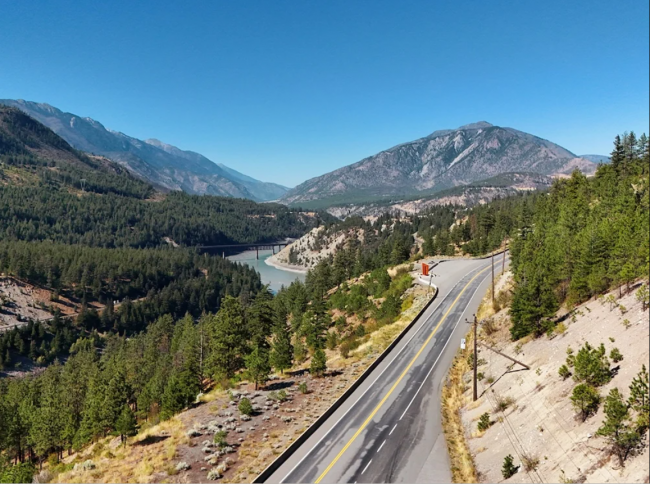
[Top photo: British Columbia is confronting the consequences of refusing to participate in treaty-making processes a century ago, George Abbott says. Photo by StandbildCA via Shutterstock.]